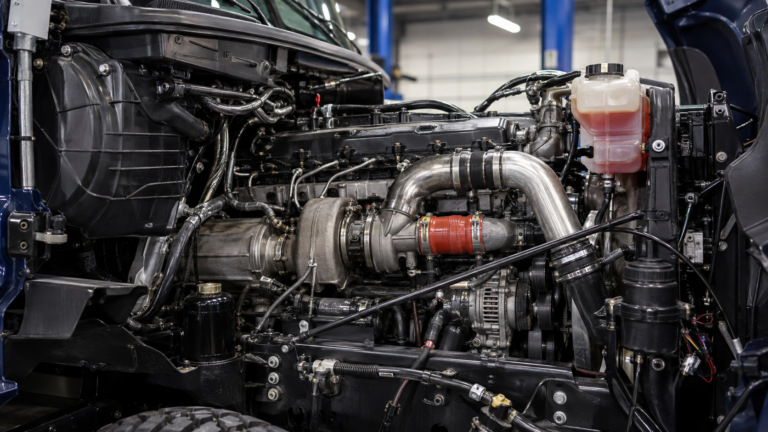
Truck specifications serve as the precise baseline for commercial transport success. Every component—from engine displacement and gear ratios to suspension types and axle ratings—directly dictates how a vehicle performs under load. In an industry defined by tight margins, severe duty cycles, and strict regulatory standards, viewing truck specs merely as technical jargon is a costly mistake. They are the primary lever for controlling operational efficiency, driver safety, and overall profitability.
1. Optimization of Payload and Towing Capacity Matching Gross Vehicle Weight Rating (GVWR) and Gross Combined Weight Rating (GCWR) to specific cargo requirements prevents under-utilization or catastrophic overload. Over-specifying wastes capital on unused capability, while under-specifying leads to premature frame metal fatigue, suspension sagging, and drivetrain failure.
2. Driveline Match and Fuel Efficiency Engine horsepower, torque curves, transmission gear ratios, and rear axle ratios work as an integrated system to keep the engine in its optimal efficiency band (“sweet spot”) at highway speeds. A mismatch of just 200 RPM at cruising speed can degrade total fleet fuel economy by 3–5% annually, adding thousands in unnecessary fuel expenses per rig.
3. Safety Compliance and Regulatory Bounds Proper braking specs—such as air disk versus drum brakes—along with exact axle placement determine compliance with federal bridge formulas and stopping-distance mandates. Correct specifications minimize jackknife risks, prevent severe safety violations during roadside DOT inspections, and protect operators from legal liability.
4. Duty-Cycle Longevity and Component Reliability Vehicles configured specifically for their operating environment (e.g., severe-duty cooling packages, oil coolers, and double-framed chassis for off-road construction) resist wear far better than off-the-shelf highway setups. Specifying heavy-duty components upfront eliminates chronic downtime and costly unscheduled repairs.
5. Driver Retention and Ergonomics Modern driver-focused specifications—including automated manual transmissions (AMTs), active lane assistance, adaptive cruise control, and optimized cab suspensions—substantially reduce driver fatigue. High-spec comfortable cabs directly correlate with lower turnover rates and fewer fatigue-related accidents.
6. Resale Value and Asset Liquidity Configuring a truck with widely sought-after commercial features improves its secondary market liquidity. Standardized wheelbases, popular engine displacements, and advanced safety suites ensure the vehicle retains a higher percentage of its initial purchase price when it comes time to trade in or liquidate the asset.