The Evolution of Heavy-Duty Engines: From Mechanical Injection to Intelligent Power
The history of heavy-duty engines is, at its core, a story of engineering’s relentless pursuit of the optimal balance between power demand and efficiency constraints. From the first direct-injection diesel installed in a truck in 1924 to today’s intelligent power platforms integrating electronic control and advanced aftertreatment, heavy-duty engines have undergone several fundamental paradigm shifts.
1. The Breakthrough: Direct Injection Puts Diesel on the Road
1924 marks a critical turning point in heavy-duty engine history.** Before this, diesel engines were too bulky and dependent on high-pressure air-assisted injection to be anything other than stationary or marine powerplants. That year, MAN engineers achieved two breakthroughs: injecting fuel directly into the cylinder by mechanical means and eliminating the cumbersome high-pressure air compressor. The first experimental engine displaced approximately 0.9 liters (105 mm bore), produced 35–40 horsepower, weighed about 420 kg, and completed a 140-kilometer road test installed in a 4-ton truck.
The significance of this technical path was simple: **the diesel engine had finally become small enough to fit under a truck’s hood.** Around the same time, Benz & Cie.’s OB 2 pre-chamber diesel was also being tested in vehicles in 1923, producing 45 horsepower with fuel costs roughly 25% lower than gasoline engines. The competition between these two technical approaches ended with the pre-chamber design prevailing after the 1927 Daimler-Benz merger, becoming the mainstream of early commercial vehicle diesels.
2. The Torque Revolution: Maxidyne Redefines “Pulling Power”
The Maxidyne engine of the mid-1960s fundamentally changed how heavy trucks understood “power. At the time, mainstream diesel engines delivered peak torque in a narrow band between 1600–1800 rpm. Once engine speed dropped, power fell off sharply, requiring 11-speed, 13-speed, or even 15-speed transmissions to maintain road speed.
Mack’s Maxidyne (ENDT 675) took an entirely different approach: it produced 906 lb-ft of peak torque at just 1200 rpm, with a torque rise of 52% (compared to only 15–20% for competitors of the era). This meant the engine actually “pulled harder” as engine speed dropped, with a flat power curve covering a broad 1200–2100 rpm range. Maxidyne could therefore be paired with just a 5-speed transmission, eliminating the need for constant downshifting when climbing grades under load.
This design philosophy profoundly influenced every heavy-duty engine developed afterward: **low-speed torque and a wide power band matter more than peak power numbers.**
3. Turbocharging and the Efficiency Race
Turbocharging began entering production heavy-duty engines in the mid-1950s. The Cummins NT series (in production from 1955) pushed output to 335 horsepower through turbocharging. By the 1970s, turbocharging had become the standard technical path for heavy-duty diesels.
Between 1975 and 1980, the Cummins NT-855 series achieved roughly a 15% improvement in fuel economy by progressively lowering rated speed (from 2100 rpm down to 1800 rpm).This “downspeed” strategy—maintaining power output while reducing engine speed—became a core efficiency optimization approach for heavy-duty engines for decades thereafter. In 1973, Mack introduced the world’s first air-to-air aftercooled heavy-duty highway engine series, the Maxidyne 300, further improving combustion efficiency and power density by reducing intake air temperature.
4. Electronic Control: The Paradigm Shift from Mechanical to Intelligent
In 1985, Detroit Diesel’s introduction of the DDEC (Detroit Diesel Electronic Control) system marked heavy-duty engines’ formal entry into the electronic era.It was the first electronic fuel injection control system to be applied on a large scale in the heavy truck market.
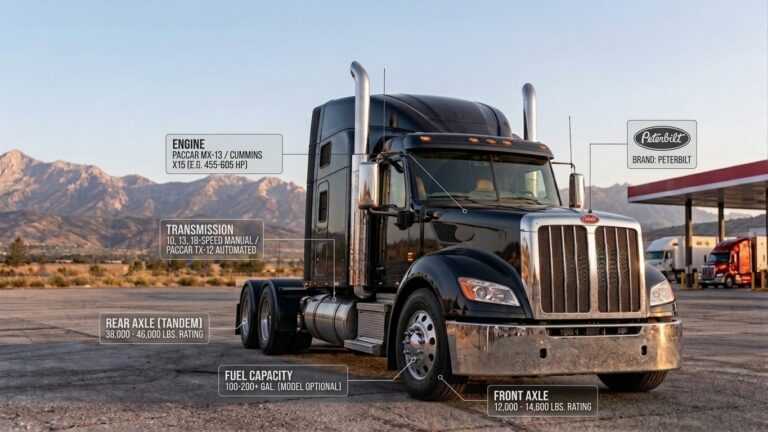
The changes brought by electronic control were systemic. Cummins progressively introduced electronic control units (ECMs) through the late 1980s and early 1990s, initially offering cruise control, road speed limiting, and PTO rpm control. By 1990, the N14 engine was equipped with full-authority electronic control, with power ratings from 460 to 525 horsepower.Electronic control improved the precision of fuel injection timing and metering by orders of magnitude, not only improving fuel economy and cold-start performance but also providing the necessary means for subsequent emissions control.
5. Emissions Regulation Drives Technological Leaps
After the 1990s, emissions regulations replaced power demand as the primary driver of heavy-duty engine technology evolution. The Cummins ISX (introduced in 1999) was a typical product of this shift: the introduction of technologies such as the variable geometry turbocharger (VGT) and high-pressure common rail/XP1 fuel systems had as their core objective maintaining acceptable fuel economy while meeting increasingly stringent NOx and particulate matter limits.
Around 2010, to meet Euro 6 standards, Scania integrated exhaust gas recirculation, variable geometry turbocharging, high-pressure common rail injection, selective catalytic reduction (SCR), and particulate filtration into a single engine platform, while increasing V8 displacement from 15.6 to 16.4 liters and adopting a lighter, stronger cylinder block. By this period, the engine was no longer a purely mechanical device but a complex engineering system in which combustion, air management, and aftertreatment systems are deeply coupled.
6. The Contemporary Path: Continuous Refinement on Mature Platforms
Current heavy-duty engine strategy shows a clear “platform continuity” characteristic. Detroit’s DD series engines, introduced in 2007, have evolved through Gen 2 (2010) to Gen 5 (2021), with cumulative global sales exceeding 1.2 million units. The Gen 6 platform, scheduled for 2027, will carry over approximately 75% of core components from the previous generation, with improvements concentrated in fuel system simplification, pre-SCR aftertreatment layout, and thermal management strategy optimization.
The logic behind this strategy is clear: against a backdrop of continuously tightening emissions standards, targeted improvements based on proven platforms ensure reliability and durability better than clean-sheet designs, while reducing compliance costs for both customers and manufacturers.
From that 420-kilogram experimental engine in 1924 to today’s intelligent power units producing over 1900 lb-ft of torque and integrating electronic control with advanced aftertreatment, the evolution of heavy-duty engines has always revolved around one core proposition: how to do more work with less fuel under ever-tighter constraints.That proposition remains unresolved to this day.